Amazon Basics AA Alkaline Batteries
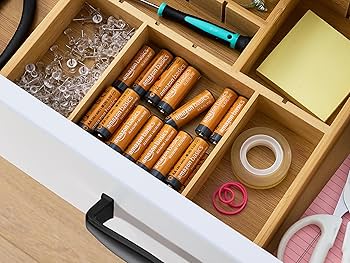
The old infrared thermometer, usually a stalwart companion, coughed its last just as I needed it most: a pre-dawn check on a recalcitrant geothermal pump. Battery failure. Not a catastrophic event, thankfully, just an inconvenience. But it did trigger a thought: the sheer volume of AA batteries I burn through in a year.
I’m a geologist, not a battery salesman. However, when you’re tramping through remote locations, running delicate equipment, and staring down deadlines, the power source suddenly matters. These Amazon Basics AA alkalines, the ubiquitous 48-pack, have become something of a benchmark for me. They’re a baseline. A starting point.
The 10-year shelf life is, frankly, impressive. I’ve had sets rattling around in my kit for upwards of three years now, and haven’t noticed any significant degradation in performance. Compare that to the off-brand options I used to experiment with… well, let’s just say I learned to always pack a backup. And a backup for the backup.
One area where these excel is the voltage output consistency. A lot of cheaper alkalines will sag under load – the digital multimeter will start dropping – as the device is running. These maintain a pretty stable 1.5 volts, which is crucial for sensitive instruments like, say, the aforementioned infrared thermometer, or anything involving precision measurement.
Here’s a small, practical downside. The packaging, while recyclable, can be a bit fiddly to open in the field. Those blister packs are engineered for frustration. My solution? I rip open a few packs back in the lab and toss the batteries into a durable, waterproof container. Problem solved.
Honestly, for general-purpose use and the price point, these Amazon Basics batteries are hard to beat. If you are a casual user of electronics, this is a no-brainer. They are reliable, and that, in the end, is what matters most. Consider these if you’re a heavy user of low to medium drain devices. Just keep a small screwdriver handy for that packaging.